This week, head scans and back ends!
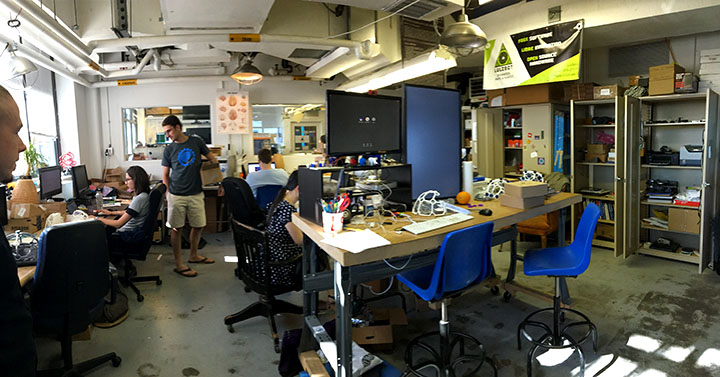
Let’s start with the former: Our team members got their head shapes scanned at OpenBCI so that Aaron, our incredible EEG headgear designer, could custom fit each one of us for Dual Brains data collection. Below is a photo of OpenBCI’s lab where Aaron used an infrared hand-held device to create a 3D virtual model of my head.
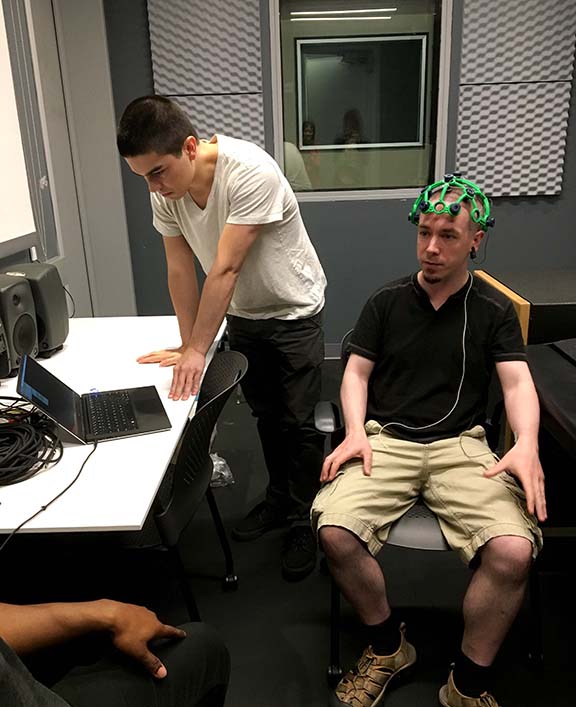
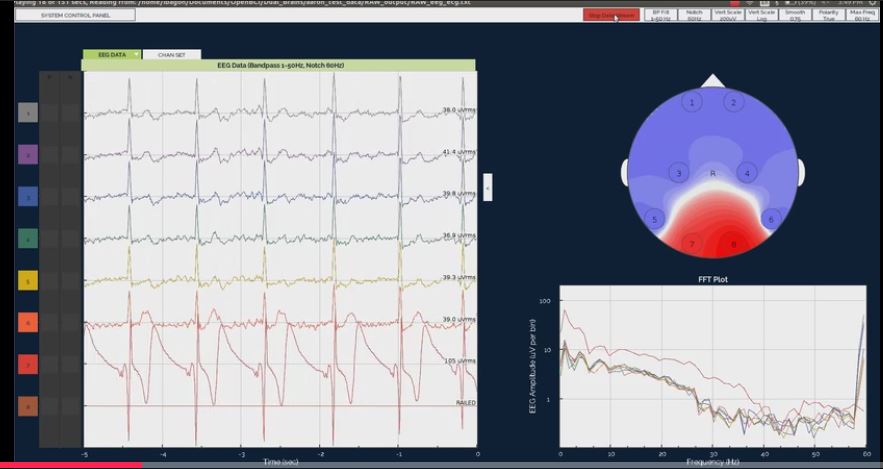
As for the latter: We are referring to computer back ends, of course! I’m happy to say Gabe and Aaron got OpenBCI hardware and software successfully up and running. They’re shown below here about to test collect a baseline for EEG and EKG dataset. Also below is a screen capture of OpenBCI’s GUI. (I hear it’s affectionately pronounced “Gooey” at the lab.)
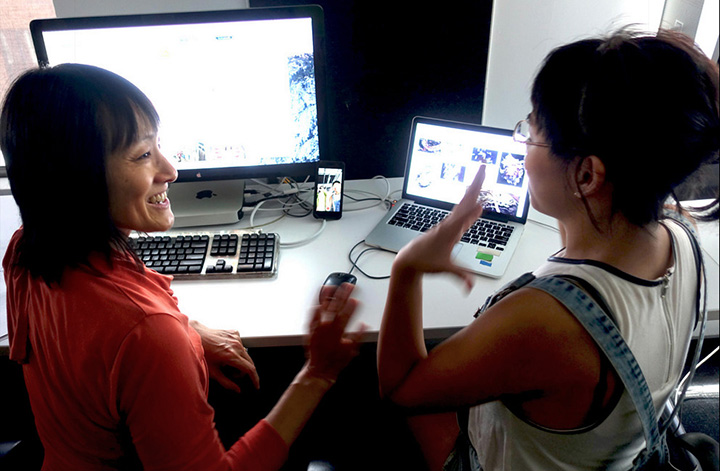
Meanwhile, Pat and I discussed the front end of Dual Brains. What should its data-driven visuals look like? We agreed as a team that it should be visually compelling in a way that is meaningful to the core of this project, which is to investigate independent and interdependent neural processing between two people.
We are also interested in audio representations of EEG, and it’s great that OpenBCI can be set up to sound generating programs.
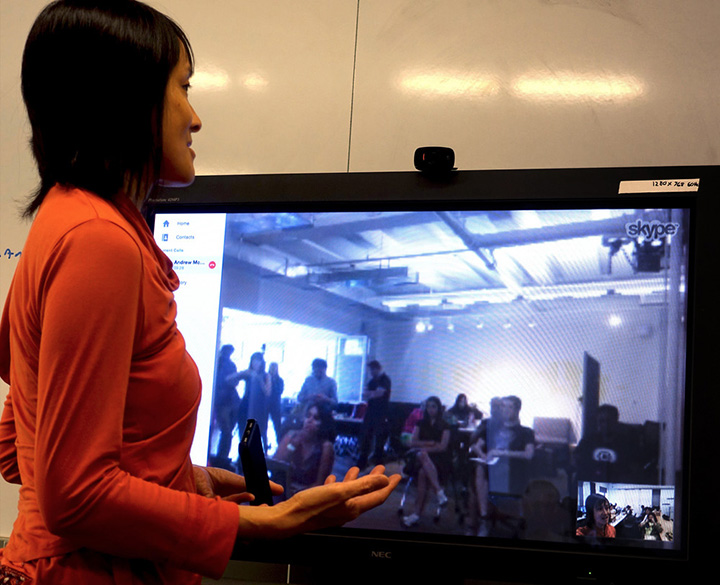
The day ended as usual with an Art-a-Hack update. Each of the nine teams gave a quick presentation on the day’s discoveries, accomplishments, or challenges via Skype communication between the Thoughtworks and NYU Tandon School of Engineering sites.
I can’t wait to see how this week will go when we actually begin to collect data and discover!
Oh, and If you’d like to keep up with this project, I invite you to subscribe at right and receive email notifications when a new post is made.