Fulbright Program

New Video Documentaries: Interior Views of Indo-Tibetan Temples at Tabo, Lamayuru, Lhalung and Mangyu Monasteries

Tabo Monastery Tsug Lhakhang, Spiti, India

At long last, I have completed four short video documentaries of the interiors of Indo-Tibetan monasteries that flourished during the 10th to 12th centuries. I feel so very honored to have had the opportunity to visit, research, and document these incredible temples.

The temples are:

  • Tabo Monastery’s Tsug Lhakhang, the Main Assembly Hall, renowned as the oldest continually functioning Tibetan Buddhist monastery, the art of which the Dalai Lama said “delightfully expresses the vigor of the transmission of Buddhism from India to Tibet and the dynamic mingling of cultures.” Established in 996 C.E. in ancient Western Tibet, now Spiti, India

  • Lamayuru Monastery’s Senge Lhakhang, or Lion Temple, established in the 11th century on a plateau in what is now Ladakh, India. Ca. 11th century, the oldest temple at Yamayuru Monastery. Contains well-preserved and rare Indo-Tibetan clay sculptures of Vairocana, Dhyani (Supreme) Buddhas, and Vajradhatu mandalas, including Gonkhang with protector deities, Ladakh, India

All four sites are among the rare Indo-Tibetan temples still found today with extant, fairly well-preserved, poly-chromed clay sculptures which depict the Five Supreme or Dhyani Buddhas, along with their associated 32 deities. These sculptures form a distinctive sacred art of this period.

After viewing these videos, which show the visual expression of Buddhism, I hope you will find inspiration to learn more about the philosophy and practice of Buddhism.

The wealth of empirical knowledge gathered through millenia by Buddhist meditation practitioners not only benefits those seeking spiritual development, but also those looking for less stress and more happiness. Who wouldn’t want that?

I believe this tradition offers a tremendously positive impact on contemporary society.

Look further, and see for yourself how psychology, health, and medical fields have made advances in treatments based on meditation. For example, neuroscientists in their research on the human brain have garnered great insights in studies on meditation and its effects on cognition and emotional regulation. A pioneer on this Dr. Richard Davidson of The Center for Healthy Minds. One result is the development of Mindfulness Based Stress Reduction (MBSR) pioneered by Dr. John Kabat-Zinn which has been applied with great success as a non-pharmaceutical approach to coping with pain and emotional challenges.

Less stress, more happiness. Again, who wouldn’t want that?

I wish you all the best in your curiosity, and your journey towards learning about mind and well-being, hallmarks of Buddhist practice.

Ajanta Caves called “The Greatest Ancient Picture Gallery” by William Dalrymple

A statue of the Buddha in one of the Ajanta Caves, India

Excerpt from “The Greatest Picture Gallery” Read this captivating article  by the excellent writer and historian William Dalrymple here at The New York Review of Books.

“[I]n 1819, a British hunting party in the jungles of the Western Ghats had followed a tiger into a remote river valley and stumbled onto what was soon recognized as one of the great wonders of India: the painted caves of Ajanta. On the walls of a line of thirty-one caves dug into an amphitheater of solid rock lay the most beautiful and ancient paintings in Buddhist art, the oldest of which dated from the second century BC—an otherwise lost golden age of Indian painting. In time it became clear that Ajanta contained probably the greatest picture gallery to survive from the ancient world, and along with the frescoes of Pompeii, the fabulous murals of Livia’s Garden House outside Rome, and the encaustic wax portraits of the Egyptian Fayyum, Ajanta’s walls represented perhaps the most comprehensive depiction of civilized life to survive from antiquity.”

This article brought back wonderful memories of visiting Ajanta Caves during my 2013-2014 Fulbright research and travels!

Read about Ajanta Caves here in this post.

Read also this related post about the nearby Ellora Caves.

Vandana’s Guest House and PBJ

I always marvel when I travel that it isn’t all that difficult to change one’s reality. Here I am! India! Landed three days ago. United Airlines, Newark to Delhi direct, I highly recommend it. Smooth flight, quiet fellow passengers, seats have personal touchscreens for entertainment, and more importantly, power! You can plug in your device for charging. I was relieved to find this because I wanted to at least be able to text home that I’d arrived, and call a local if I needed help.

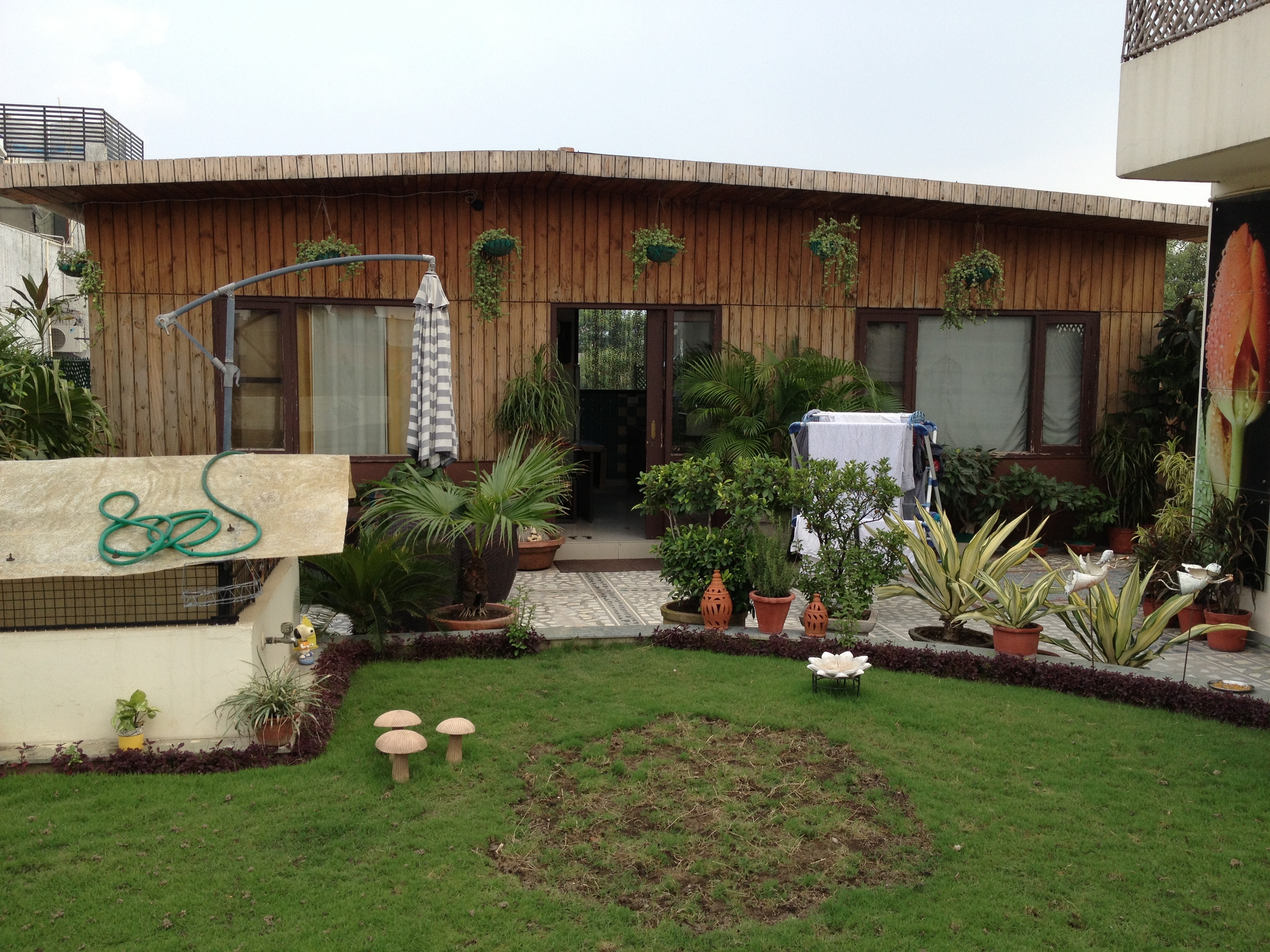
Vandana's Guest House rooftop garden rooms, Delhi, India
Vandana’s Guest House rooftop garden rooms, Delhi, India

Speaking of this, I’m thankful for help from others who look out for me! Fulbright sent a driver to pick me up at the airport. It was fantastic because after a long flight you emerge with jetlagged fuzziness. I found myself equally concerned with whether I could still purchase duty-free, as I was with completing an accurate customs form. Then later, there’s the confusing ruckus of countless drivers looking for passengers, holding placards or not, congested by the exit where travelers are also wending their way with loaded luggage carts. As it turns out, I couldn’t find my driver because I was standing in the wrong place, but he found me by looking in this wrong place!

The ubiquitous tuktuk or auto rickshaw

They also prearranged my weeklong stay at lovely Vandana’s Guest House. It’s home away from home for now, run by a warm, helpful family who live here, too. My garden rooftop room with adjoining kitchen which I share with the next door Fulbrighter is perfect because I can stow away my PBJ fixings. Don’t laugh, those sandwiches, which I make and pack for the day as emergency snacks, have proved to be vital in our face-paced quest to complete paperwork as quickly as possible so I can get to the Himalayas in time. Yesterday we didn’t have time for lunch all day, shuttling to and fro in tuktuks from USIEF to University of Delhi where I am affiliated, to Connaught Place for errands, to Archeological Survey of India from whom I’m seeking permission to photograph the interiors of monasteries under its jurisdiction. This glycemically-challenged traveler was happy to think straight after snarfing my PBJ on the run!

Fulbright also offered a ‘Facilitator’ to help with the initial transition. Thank goodness! He has been an enormous guide through Delhi these past two days, fording me through congested traffic, bureaucracy, electronic logistics, and procedures! Yes, i need an ATM machine, Citibank is great. Oh and yes, an Indian SIM card please, micro chip with reception in the Himalayas. Yes, I will definitely take that surge protection power strip with universal plugs!

To top it off, he has been a great conversationalist–interested, approachable, frank. Bustling with vision and ideas. We even discussed caste, a subject often considered delicate and charged in this nation’s changing order.

Today’s largest agenda: complete registration at FRRO, the Foreigners Regional Registration Office. Quite an exercise in following directions. Three copies of this, originals only of that, retrieve this signed form from here, fill out (or ‘fill up’ as Indians say) this form online, etc. One fellow Fulbrighter quipped, carry lots of extra passport photos and copies of your passport, they love them here. Indeed! For example, for a foreigner to get a SIM card, you need to supply both.

Tips for Artists: How to Get a Fulbright Scholar Fellowship

Fulbright logoThis post is to pay it forward! I’m so grateful for the help that I’ve received from others. A few years ago, I didn’t even know artists could apply for a Fulbright Scholar fellowship, and now I have been awarded one to conduct research and create new work in India. I was emboldened to consider it thanks to a fellow artist who told me about her own Fulbright to India. I always thought it was for professors, students, and others associated with academia. NOT SO. Professionals “at-large,” that is, not associated with a college or university, may apply if they are of “recognized professional standing and have substantial professional accomplishments in their field.”

If you are an artist and interested in applying for the U.S. Core Fulbright Scholar program, now is the time to do so for 2014-2015. While the deadline is August 1st, 2013, I would advise you begin right away. It took about five months for me from beginning to end–from thoroughly reading the Fulbright website, understanding their mission, to researching at the library, drafting, writing, revising, revising, revising a good project statement. Your proposal should have quotes, footnotes, and bibliography, like a short research paper. It should be clear and concise. Be sure not to go over the number of pages allowed. Be sure your project is feasible and can be accomplished within the amount of time proposed.

Fulbright logoThese tips are intended to supplement Fulbright’s project statement guidelines. Please read and follow what’s on their website carefully. Here was my outline, using these subtitles:

  • Title and Intro – My first paragraph immediately said what my objective was and addressed these two key aspects:  Why I needed to conduct research in India that could not be done anywhere else, and how it is related to my work. Don’t make reviewers, who are reading hundreds of proposals, look around for what you propose to do! Say it right away.
  • Methodology – i.e., research and documentation, creative work and application
  • Academic and Professional Context – why I was interested in doing this, how my work is related to the research, fellow artists whose work have influenced mine, etc. Say why there is a worthy professional art context for your proposal.
  • Dissemination – My understanding was that some reviewers may not be familiar with how artists disseminate their research, so I was careful to be specific about how artists share ideas and their work through exhibitions, artist talks, lectures, workshops, etc. Do your homework and identify places abroad and in the U.S. where you could or would in fact be showing artwork, be on panel discussion, and so forth.
  • Significance of Research to My Discipline, My Development, and Host Country – I described how my research would contribute to contemporary art, what I envisioned my new creative work would be as a result of the fellowship experience, and how it would foster cross-cultural understanding.

Be sure to have helpful readers give you feedback as you work on your drafts.

I would recommend you have your project statement written two months in advance of the deadline so you can send it along to your referees for them to review and have time to write you letters of recommendations. You will also need to find an affiliation in your host country. Even though it is not required in India, it was highly recommended to me by other Fulbrighters. It took me 4-6 weeks to identify an Indian university faculty member with related interests, and secure his letter of invitation. I sent numerous emails, with my proposal attached, to different faculty I identified online. I also reached out to Indian and American friends with any connections or leads. Really appreciated their aid!

For the three letters of recommendation, I followed an artist Fulbright fellow’s advice. I asked the dean of my alma mater who was familiar with my work over the years since I graduated; a curator; and a Fulbright fellow. Even though I was applying as an at-large artist, Fulbright is still a scholarly program and having at least one academic referral strengthens one’s application.

For supplemental materials, which would be examples of your artwork, I recommend you include a list of works submitted, providing all the usual information (title, medium, dimensions, date) with short descriptions if necessary. Again, not all reviewers will be from your art discipline, so write for fellow professionals as well as layperson.

Fulbright also conducts webinars to provide further information and demystify the grant application process. I highly recommend these. There is a question-and-answer period at the end of the presentation. Webinar schedule for 2014-2015 application period can be found here.

I hope these are helpful tips. Good luck on your application!

________________________________________________________________

The Fulbright Program is the flagship international educational exchange program sponsored by the U.S. government and is designed to “increase mutual understanding between the people of the United States and the people of other countries.” With this goal as a starting point, the Fulbright Program has provided almost 310,000 participants—chosen for their academic merit and leadership potential — with the opportunity to study, teach and conduct research, exchange ideas and contribute to finding solutions to shared international concerns. —from Fulbright website

Himalayas / hi-MAAL-yah

Learn something new every day. The correct pronunciation for Himalaya is “hi-MAAL-yah.”

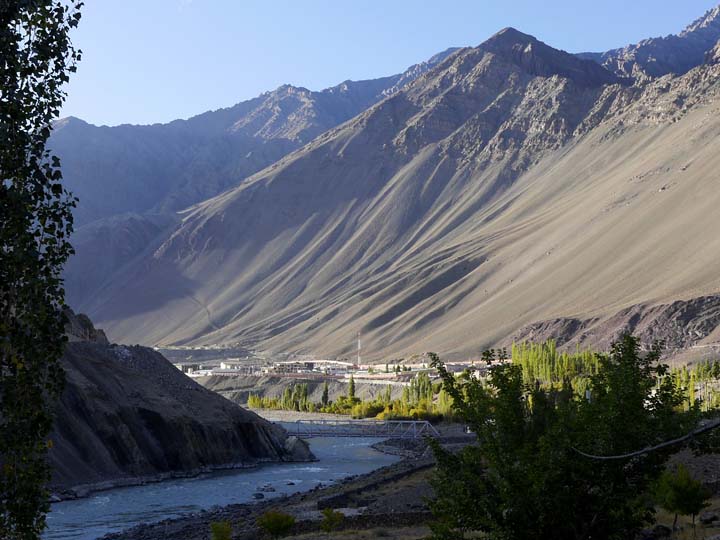
Mountains and the Indus River Valley as seen from Alchi Monastery circumambulatory, Himalayas.

I look forward to going there later this year to conduct research as an artist, made possible by a Fulbright-Nehru Scholar award. Excited and honored! Truly grateful for this opportunity! I will be researching murals of Indo-Tibetan monasteries in Lahaul, Spiti, and Ladakh districts, with a focus on mandalas as a blueprint for understanding the nature of mind and reality.

So while my departure is still months away, I’ve already begun traveling in my mind as I await further details from Fulbright.