Himachal Pradesh

Bodhgaya & Terrorism

Statue of Buddha inside the Mahabodhi Temple, Bodhgaya, India

Bodhgaya and terrorism. I would never have put these two concepts together. That is, not until I heard about the bombings that occurred just a little over a week ago at this venerable holiest-of-the-holy site. The very place where Buddha became enlightened sitting under a bodhi tree. The place where thousands of pilgrims rich and poor alike travel to, to do full body prostrations, or make butter lamp offerings, meditate, circumambulate, chant songs and mantras, and other practices that cultivate one’s mind to turn towards wisdom, to enact compassion, to see the true nature of reality, the illusion of selfhood, amidst impermanence.

If you’ve ever been here, and experienced the electrifying devotion practitioners bring, you would be hard pressed to pair the scene with terror. It makes me feel sad for the perpetrators that they would harbor such contorted mentalities and ill plans among peaceful people.

Read some coverage of it here.

Fortunately, it seems there were no fatalities, and no serious structural damage done to the World Heritage site.

The Indian government today has however issued alert warnings for further possible terrorist strikes on Himachal Pradesh Buddhist monasteries.

This is discouraging and unwelcome news, to say the least, as I plan to travel to over a dozen such Himalayan sacred sites soon.
The Great Translator Rinchen Zangpo

I’m currently reading David Snellgrove’s “Indo-Tibetan Buddhism: Indian Buddhists & Their Tibetan Successors.” It concentrates on the tantric period of Buddhist theory and practice, from the 8th to the 13th centuries. This was a fertile time of the transmission of Buddhism from India to Tibet. I’m particularly interested in the prodigious legacy of The Great Translator Rinchen Zangpo (958–1055 C.E.) who translated voluminous original Sanskrit sutras into Tibetan, and therefore helped preserve the doctrines and teachings. These original Sanskrit sources are now largely lost in India.

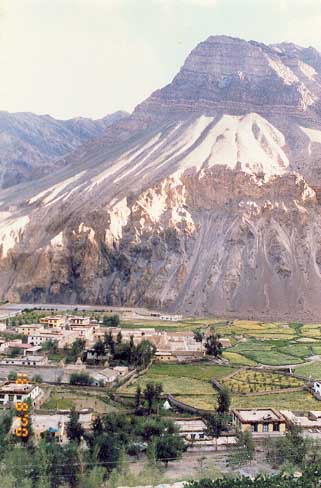
Tabo Monastery, Spiti, Himachal Pradesh, India
Photo: Tabo Monastery

Rinchen Zangpo is also credited with building over one hundred monasteries in Western Tibet, many still existing now in modern day Indian Himalayas, including the famous Tabo Monastery in Spiti, Himachal Pradesh.

I really look forward to seeing Tabo’s murals. They are extensive and among the best preserved from Rinchen Zangpo’s time. In addition to the art, its architecture is an excellent example of mandala layout and structure, built in direct relationship to sutra descriptions. Founded in 996 C.E., Tabo is considered to be the oldest continuously functioning Buddhist monastery in India and the Himalayas.