December 12-13, 2013
After seeing Ajanta Caves–which were amazing and beyond my imagination of what carved and decorated ancient Buddhist caves would look like–I visited Ellora Caves, which stunned me further because of the elaborate artistic and architectural feats!


Founded after Ajanta from about 600 to 1000 C.E., this complex of 34 caves has some breathtaking sanctuaries of unbelievably grand scale, and free-standing temples. Yes, that’s right, freely standing buildings that were carved out of once solid rock cliff!
Besides the monolithic bravado, the Ellora complex, about 106 kilometers away from Ajanta, is also unique because it consists of Buddhist, Hindu, and Jain caves. The approximately two kilometer stretch of Deccan Traps in which these caves are excavated side by side testify to the peaceful ancient coexistence of these three major Indian religions.
The first twelve caves are Buddhist and appear to be the oldest, dating circa 600 to 800 C.E. They comprise monasteries and one chaitya or temple. The Hindu ones are Caves 13 to 29, perhaps the best known being Cave 16, the Kailash Temple. These were built between 600 to 900 C.E. The Jain group of caves are 30 to 34, and were the last to be excavated, circa 800 to 1000 C.E.

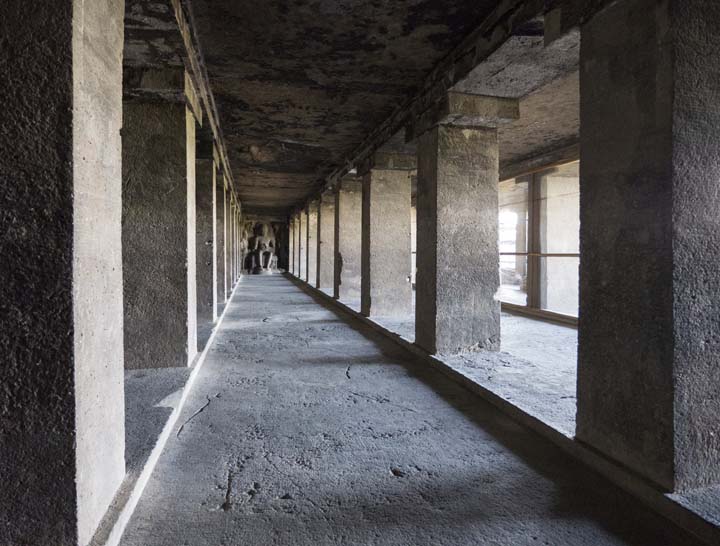
Buddhist Caves 11 and 12 went to the next level—literally. Compared to their Ajanta predecessors, these three-storied monasteries are impressive, surpassing the Ajanta two-storied excavations in terms of number of floors and scale. What struck me immediately about both cave facades were their architectural simplicity. They looked modern to me, and I was surprised by what it called to mind. The austere repetition of columns and openings, the lack of carved adornment, and the same feeling of monumentality as one walks up to their courtyards strangely reminded me of the experience I had seeing Italian EUR architecture, in particular the Palazzo della Civilta Italiana, built in Rome between 1938 and 1943.
The space and time of day I was there also created very much the still and surreal feeling of Giorgio de Chirico’s paintings.


The plain facades of Caves 11 and 12 give no hint of the richly carved sculptures within. I had assumed from the exterior that the interiors would be simple, probably cells for a large number of devotees. From my modern mentality, the buildings looked like they were ancient boarding rooms with shared veranda on each floor.
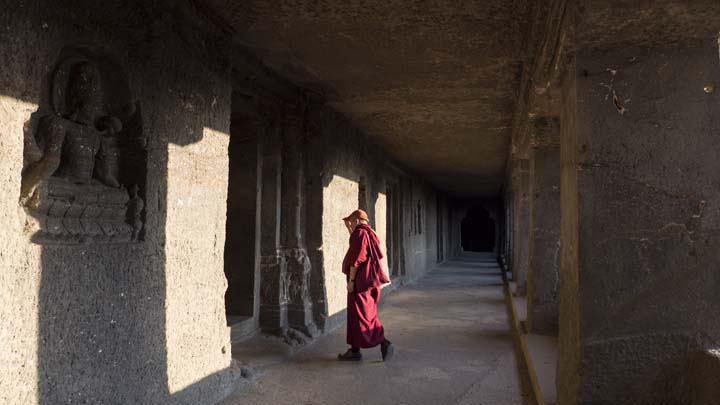
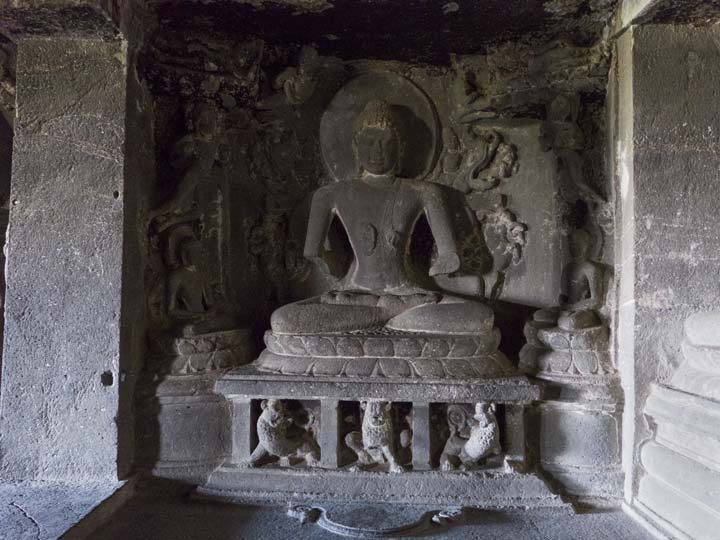
Little did I know that the rooms on each floor of Cave 11, the first one I saw, would house sanctums.

Each one would be a variation of the below sanctum. They were so plentiful that I can’t remember how many I saw. Typically, the central figure was a massive Buddha, flanked symmetrically by large-scaled Avalokiteshvara and Vajrapani, life-sized standing bodhisattvas, seated small buddhas, and flying divine figures.


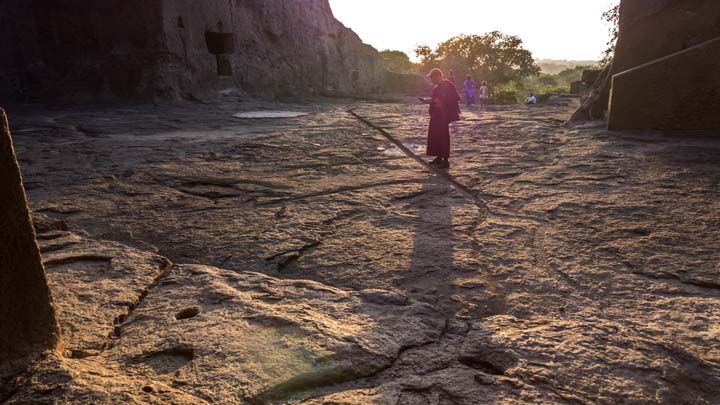
Cave 12 dates to circa 8th century C.E., and is known as “Teen Tal” because of its three floors. The first and second floors have a pillared halls, antechambers and sanctums with cells. The third floor, while similar in plan has extensive sculptures along the perimeters of a great colonnaded hall.
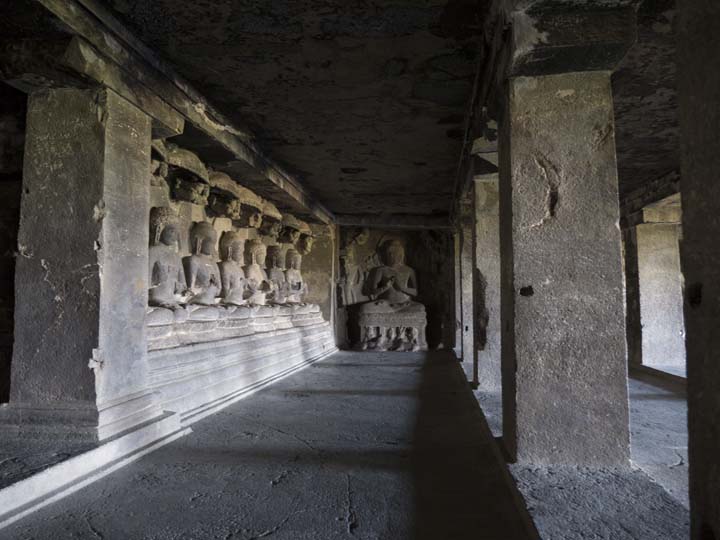
The front wall has Buddhas seated on double lotuses with foliage and umbrellas projecting overhead.

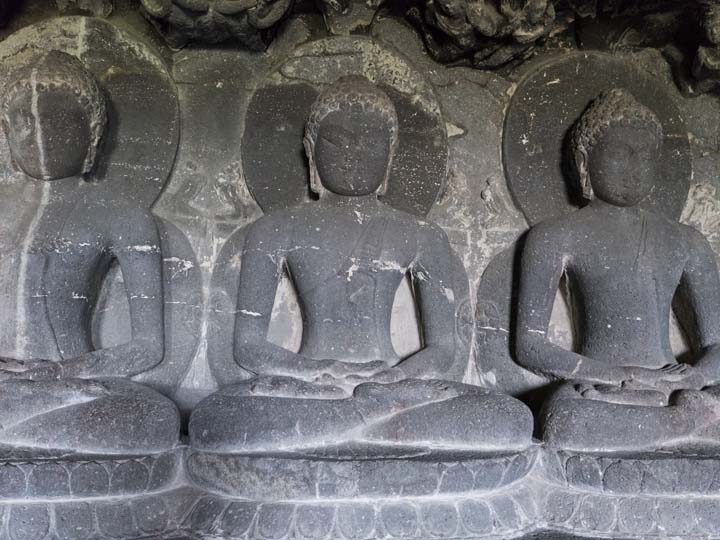

Visible above on the left is Buddha seated on a lion throne with fly-whisk attendants.
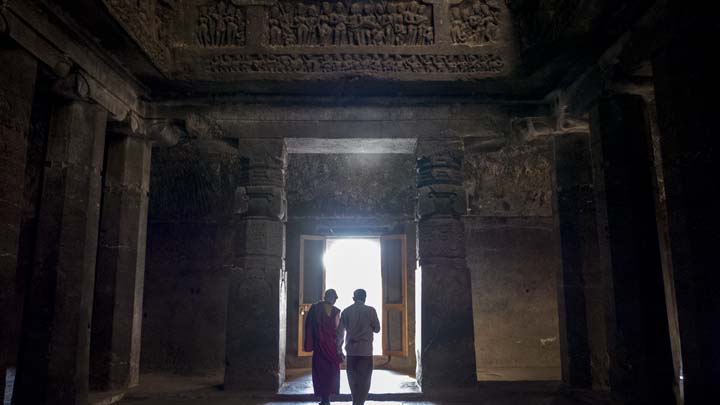
Pictured below is the antechamber, which has large sculptures of Padmapani and Vajrapani flanking the sanctum entrance and twelve goddesses seated on lotus thrones. There is evidence that these were once painted.
In fact, based on the preceding Ajanta practices, I assume that most of the carvings in the Ellora caves were also plastered and painted. So when you look at these images, imagine that the columns, statues, and other architectural elements were adorned with colors and designs, painted faces, and other details. What rich interiors!


If you find the scale of this Buddhist cave impressive, how about Cave 5? It measures 53.28 x 36.63 meters, or 175 feet deep x 120 feet wide.


Cave 10 is a really lovely chaitya, similar to the apsidal plans of Ajanta Caves 19 and 26, but its facade is more ornate, featuring a wraparound pillared veranda and side porticos that lead to chambers.


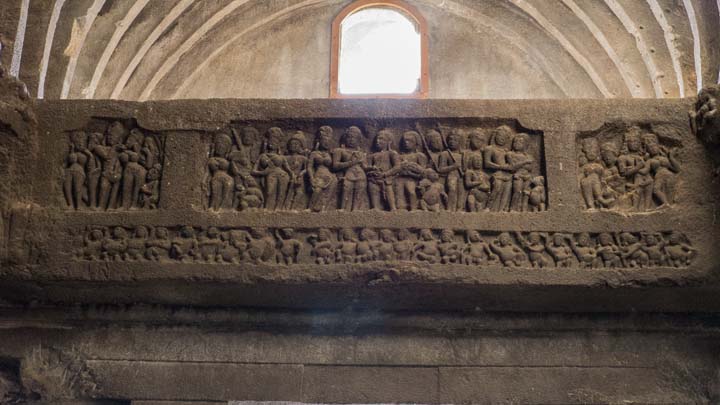
These are the highlights of the Buddhist caves at Ellora. I hope that, like me, you will now never think of the word “cave” the same again! Instead of conjuring up only oddly shaped, naturally formed, sooty rock shelters, the word will hereon also bring to mind colonnaded halls, monumental sculptures, carved friezes, painted barrel vaulted ceilings and other graceful elements of the ancient excavated architecture of India.
Next up will be the best of Ellora’s Hindu and Jain caves!
All photos © 2013, Eva Lee.
Thanks for this fascinating article Eva, and some of the best pictures I have seen of the caves. I look forward to your next post!
Thanks, Anita, for taking a look and for your enthusiastic response!